Clinical Trials: A World of Research
Where science meets geography; a guide to the global landscape, history, and regulatory map of clinical research
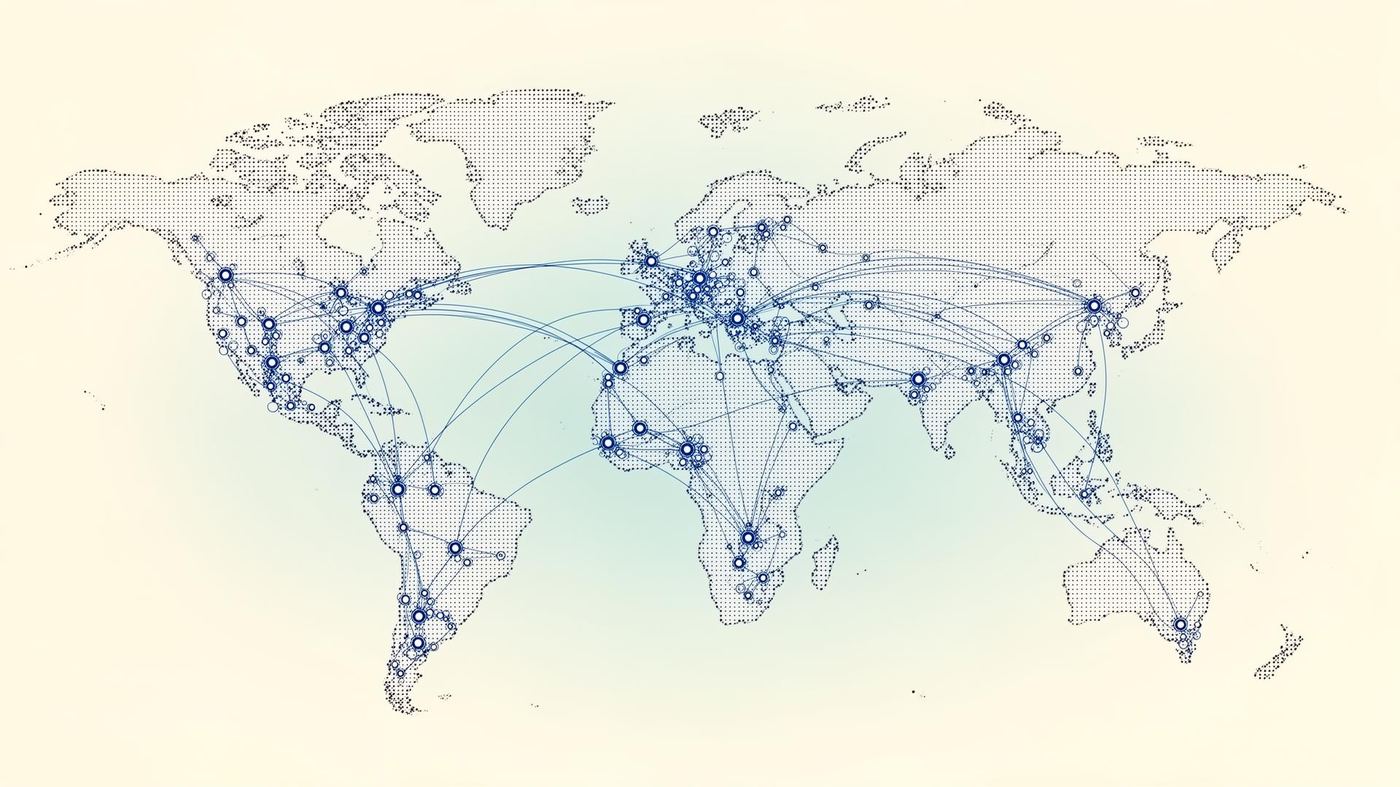
Clinical research is one of the most globally distributed scientific endeavors on earth; yet most of the conversation about it happens in a handful of countries, languages, and networks. This article is the entry point to the Geography of Clinical Trials series: a country-by-country guide to the global clinical research landscape, written for sponsors, CROs, investigators, and anyone who wants to understand where trials happen and what makes each region of the world distinctive as a research environment. It also covers the regulatory framework that ties the whole enterprise together and introduces the directory that inspired the series.
What is a Clinical Trial?
A clinical trial is a structured research study conducted with human volunteers to evaluate a medical intervention; whether a new drug, vaccine, device, or procedure. It is the gold standard pathway through which experimental therapies move from laboratory promise to patient reality. Without clinical trials, there is no approved medicine.
Trials are classified into phases. Phase I tests safety in a small group. Phase II examines efficacy and dosing. Phase III compares the new treatment against the current standard of care in large populations. Phase IV monitors long-term effects after a therapy reaches the market. Each phase answers different questions and involves progressively larger, more diverse participant groups.
At every stage, the rights, safety, and wellbeing of participants come first. This is not merely an ethical principle; it is a legal and regulatory obligation in every country that hosts clinical research, codified through decades of hard-won international consensus.
Major Regulatory Agencies
Clinical trials cannot proceed without authorization from the relevant national or regional competent authority. These agencies review protocols, protect participant rights, and determine whether trial data meet the standard for drug approval. The agencies below are the primary gatekeepers for the majority of global pharmaceutical development.
Food & Drug Administration
FDA / CDER / CBERThe world's most influential drug regulator. FDA approval is often treated as the de facto global gold standard. CDER oversees drugs; CBER covers biologics. Sets the regulatory bar that most other agencies calibrate to.
European Medicines Agency
EMACoordinates drug evaluation across EU member states. Operates the Clinical Trials Information System (CTIS) under EU Regulation 536/2014. Member state NCAs retain local authorization powers alongside the EMA.
Pharmaceuticals & Medical Devices Agency
PMDAJapan's primary regulatory body for pharmaceuticals, medical devices, and quasi-drugs. An original participant in ICH; local trial data requirements mean Japan is often included as a standalone region in global development plans.
National Medical Products Administration
NMPAFormerly CFDA. Sweeping reforms since 2015 have dramatically shortened approval timelines, enabling simultaneous global development. China is now the largest single contributor to APAC trial volume.
International Council for Harmonisation
ICHNot a regulator, but the standards body. ICH brings together FDA, EMA, PMDA, and industry to harmonize technical requirements globally. Its E6 GCP guidelines are the universal framework under which all member-country trials operate.
World Health Organization
WHO / ICTRPSets ethical standards and operates the International Clinical Trials Registry Platform (ICTRP) to ensure transparency. Especially influential in low- and middle-income countries that rely on WHO guidelines in the absence of strong national agencies.
Medicines & Healthcare Products Regulatory Agency
MHRAPost-Brexit, the UK runs its own authorization pathway. MHRA is known for streamlined timelines and has become increasingly attractive for early-phase trials seeking a respected Western regulatory imprimatur outside the EU.
Health Canada
HC / TPDRegulates clinical trials under the Food and Drugs Act. Health Canada's CTA (Clinical Trial Application) process is aligned with ICH-GCP. Canada regularly participates in global multi-country trials, particularly in oncology and CNS.
Therapeutic Goods Administration
TGAAustralia offers two distinct pathways; CTN (notification) and CTA (application); allowing particularly fast trial initiation. The TGA is a founding ICH observer. Australia is among the fastest countries globally to begin a trial.
A note on national agencies: Every country with active clinical research has its own competent authority; from Latvia's ZVA to Georgia's MRDA to Brazil's ANVISA. These national bodies operate under ICH-GCP but maintain local timelines, language requirements, and approval nuances. Understanding the national agency is the first step to understanding any country's trial environment.
The Geography: How Experts Map the World
When sponsors, CROs, and site networks plan global studies, they think in regions; clusters of countries that share regulatory frameworks, patient demographics, cost profiles, or healthcare infrastructure characteristics. These regions are not political designations; they are operational realities shaped by decades of trial experience.
The table below shows how the clinical research industry commonly divides the world, along with the countries that fall within each region. As this series grows, country names will link directly to their dedicated profile pages.
Western Europe
The traditional heartland of global trials. Highest regulatory standards, established investigator networks, and deep academic medical infrastructure; offset by high costs, long approval timelines, and intense site competition. Strong in oncology, CNS, and rare diseases.
CEE
One of the most sought-after regions globally. Treatment-naïve patient populations, EU-aligned regulatory frameworks, fast approval timelines, and significantly lower operating costs than Western Europe. A workhorse of Phase II/III global trials.
Baltic States
Estonia, Latvia, and Lithuania form a tight sub-region with a combined population of ~6 million. EU members since 2004, fully GCP-aligned, and known for motivated investigators and fast ~60-day approval timelines. High cardiovascular disease burden offers strong cardiology trial pools.
Caucasus / CIS
Emerging and increasingly attractive. Georgia and Armenia have developed strong regulatory frameworks independent of Russia. Ukraine (pre-conflict) was a major CEE hub. Belarus and Kazakhstan are active but politically complex. Ethnic diversity and low trial density are key advantages.
APAC
The world's fastest-growing clinical trial region, accounting for over 50% of new trial registrations globally between 2017–2021. Driven by China's regulatory transformation, India's patient scale, and Australia's efficient pathways. Cost advantages and large, diverse populations are decisive draws.
LATAM
Large, treatment-naïve populations with significant unmet medical need and growing investigator capacity. Brazil and Argentina are the traditional anchors; Colombia is the fastest-growing market. Drug shortages incentivize patient enrollment. The US Eastern Time Zone overlap eases sponsor oversight.
MENA
A region with distinctive genetic profiles shaped by geographic isolation and consanguinity; offering unique value for rare disease and genetic disorder research. Regulatory frameworks are maturing, led by Saudi Arabia (NCBE/SFDA) and the UAE. High-income populations reduce cost advantages but boost infrastructure quality.
Africa
Underutilized relative to its potential. Africa carries 25% of the world's disease burden but accounts for a fraction of global trial activity. South Africa is the most mature trial environment; Kenya, Nigeria, and Ghana are growing hubs. Infectious disease, HIV, tuberculosis, and malaria trials are the primary strengths. Infrastructure and ethics committee capacity are expanding rapidly.
North America
The world's largest and most established trial market; and the most expensive. The US alone hosts more registered trials than any other country. High infrastructure, sophisticated investigator networks, and the most competitive site landscape on earth. The FDA's approval standards set the global reference point.
Note on linking: Country names highlighted in teal are live article pages in this series. As additional countries are profiled, their pills will become clickable links. Check back as the series grows.
About This Series; And the Problem It Addresses
Clinical trials have always had a geography problem. The sites that appear on sponsor shortlists, the investigators CROs call first, the countries selected for global protocols; these choices are shaped as much by familiarity and network access as by scientific merit. A well-connected site in Boston or Berlin will reliably land in a feasibility survey. An equally qualified cardiology unit in Riga, a specialist oncology centre in Tbilisi, or a high-volume diabetes clinic in Nairobi may never be considered; not because they fall short, but because they are simply invisible.
The consequences compound over time. Underrepresented regions see slower adoption of investigational therapies by their patient populations. Sites outside the established networks miss the institutional revenue, the investigator training, and the scientific credibility that trial participation brings. And sponsors; paradoxically; pay a price too: slower enrollment, less diverse data, and missed opportunities in precisely the markets where treatment-naïve patients are most concentrated.
This series was conceived to map that imbalance; to profile every significant clinical research geography on its own terms, with the same depth and seriousness typically reserved for the usual suspects.
It is produced by the team at Kitsa, a platform built around a deceptively simple idea: that every qualified clinical trial site in the world deserves to be found. Kitsa has built what is believed to be the most comprehensive open directory of clinical trial sites ever assembled; spanning established academic powerhouses and emerging community sites alike, from the research corridors of Western Europe to hospitals in Sub-Saharan Africa that have never appeared in a CRO's feasibility database. The directory is designed to give every site; regardless of geography, size, or network affiliation; an equal presence in front of the sponsors and CROs who are looking for them.
The Geography of Clinical Trials series is Kitsa's editorial contribution to that same mission. Each country profile in this series links directly to that country's sites on the Kitsa platform; so that the context provided here translates immediately into actionable discovery.
The Bottom Line
Clinical trials are the engine of medical progress; and their geography shapes which patients get access to innovation first, which countries build scientific capacity, and how quickly life-saving therapies reach the people who need them. This series profiles the countries that make up the global research map: their populations, regulatory environments, top sites, and distinctive advantages. Each is a window into a different part of the clinical research world.
Keep exploring
Recommended next
- Blog
Hidden Geography of Alzheimer's: Site Selection Insights
Alzheimer's trials often rely on academic site networks that miss high-burden communities. Explore how geography, diagnosis gaps, and smarter feasibility data shape site selection.
- Blog
BA/BE Studies in India: A Practical Guide for Sponsors
CDSCO processes 4,000-4,500 BA/BE study applications yearly. See what sponsors should verify before selecting a bioequivalence site in India.
- Glossary
Clinical Trial Startup
Clinical trial startup is the set of activities between protocol finalization and first-patient-in (FPI), including regulatory submissions, IRB/IEC approvals, contract and budget execution, site selection and qualification, central lab and IRT setup, IP labeling, and site initiation visits.
- Blog
Clinical Trial Startup Workflow Checklist: Site Activation Guide
A research-backed clinical trial startup workflow checklist covering feasibility, contracts, IRB, SIV, and site activation. Reduce delays with structured execution.